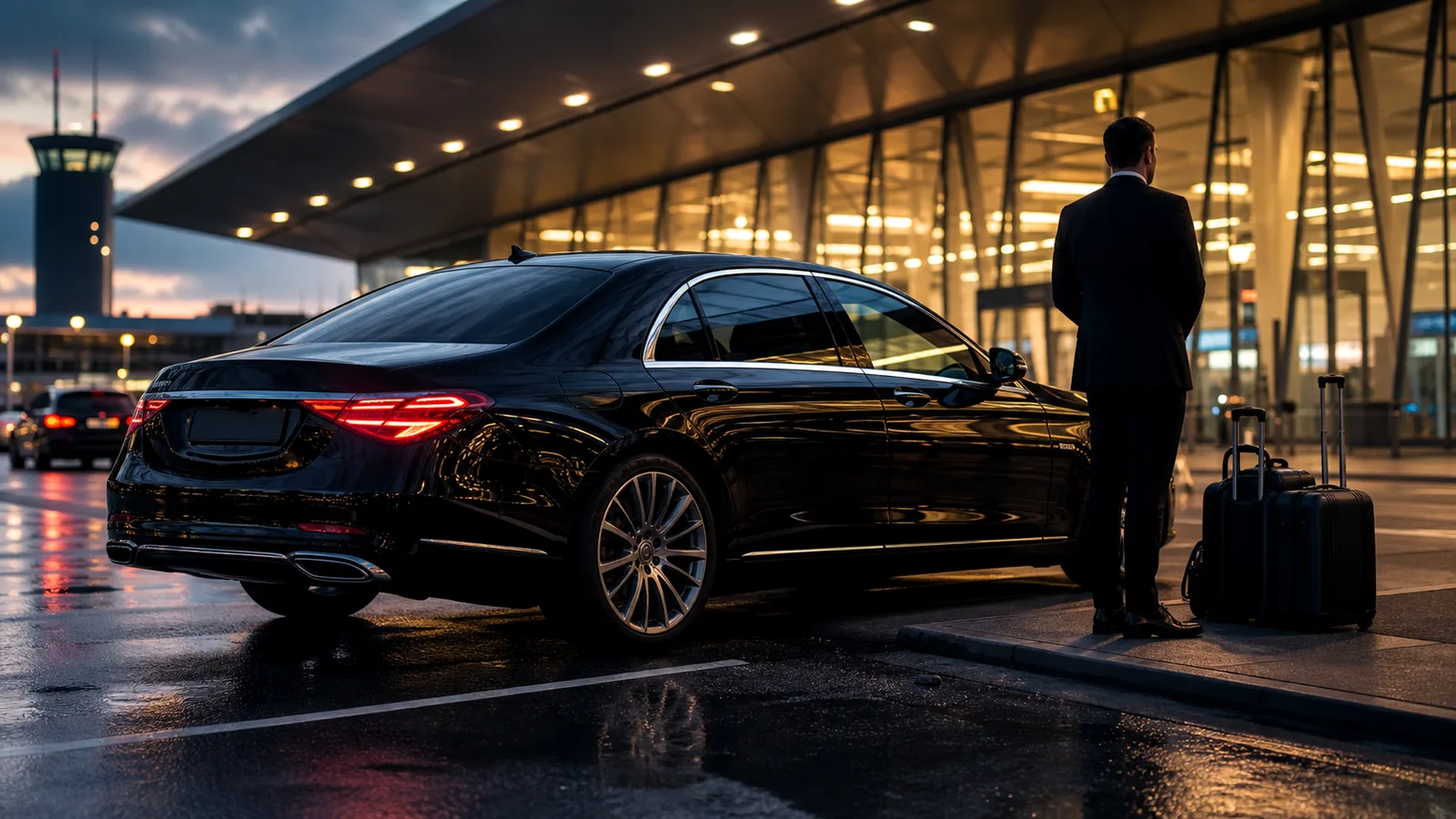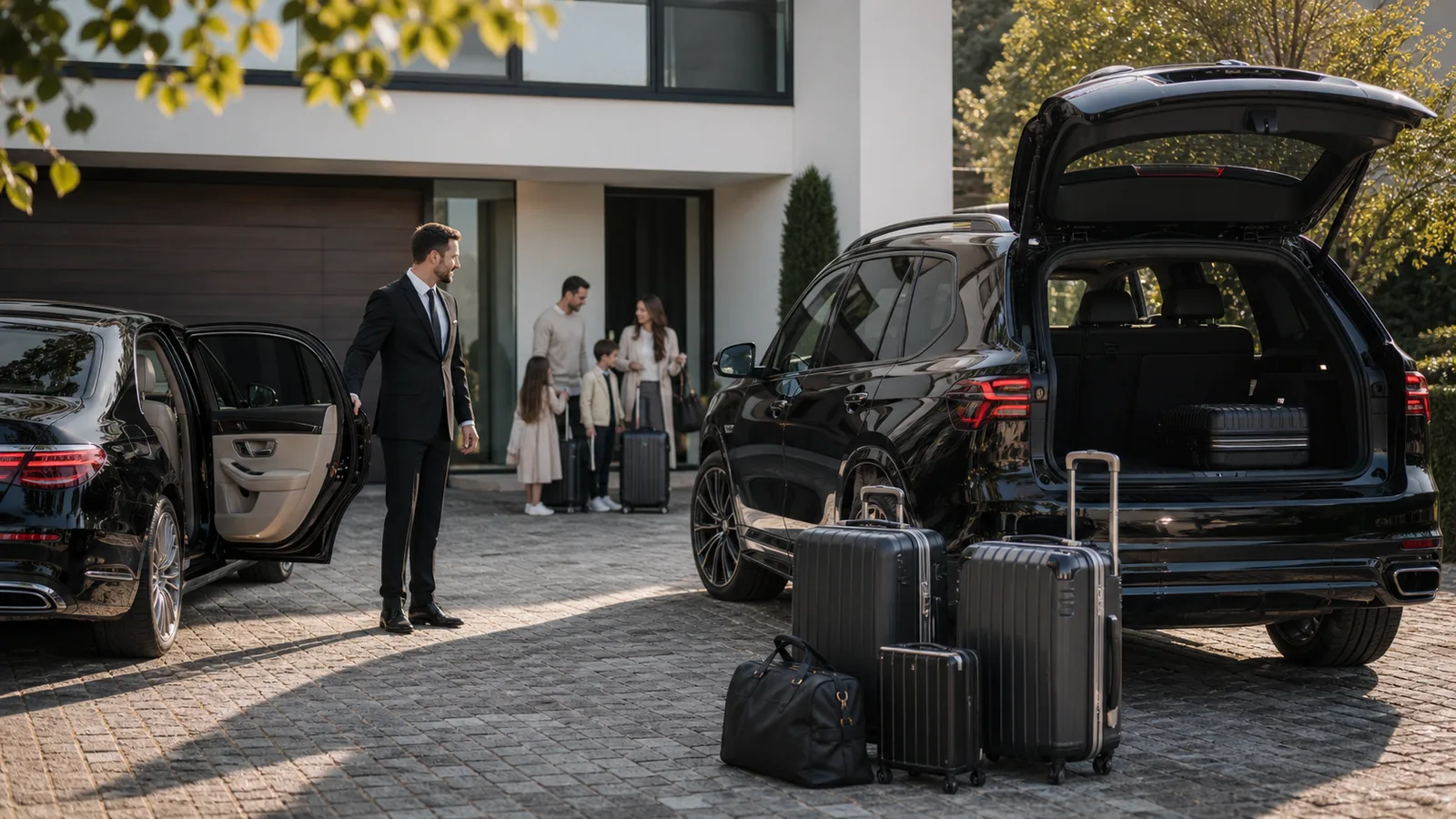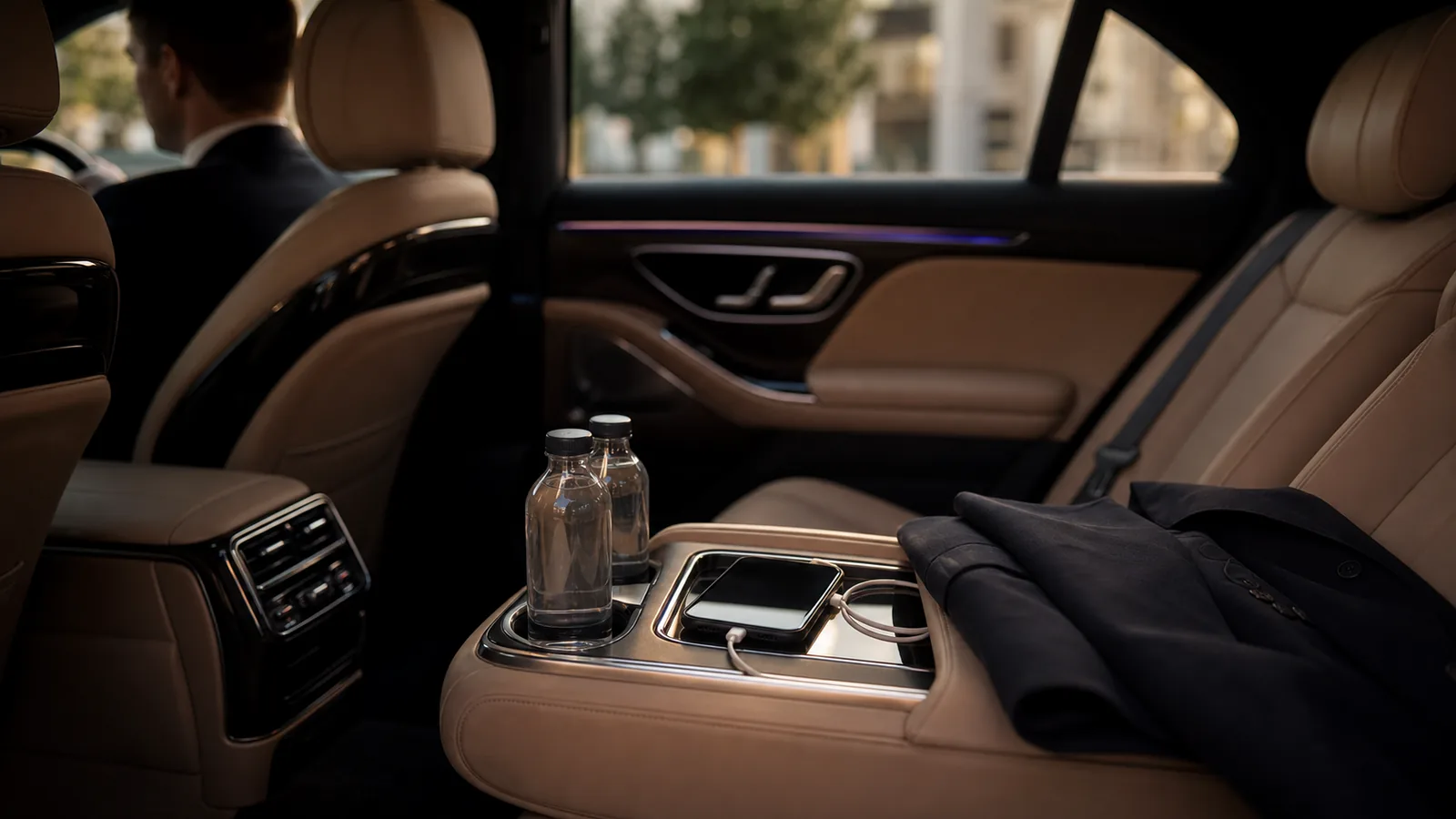
The customer books a Mercedes S-Class for a meeting with a foreign partner. It says: 9:00, address, hotel. He doesn't say: I want you to arrive on time, that the car is clean, that your suit is pressed, that it's cool inside and that you don't talk on the phone during the course.
Why doesn't he say that? Because he assumes it's obvious. And he's right — but only if the company really understands its product.
"I want to work quietly" — and he didn't say a word
The passenger gets in, opens the laptop. He doesn't say "please don't talk" or "please turn off the radio". He takes out his laptop and opens it — that's it.
Experienced driver: turns off the music or turns the volume down to zero, focuses on smooth driving without jerks. Does not initiate conversation. If something needs to be said about the route, he says it during a natural break, never stopping writing.
"I'm tired" — and he only said "good morning"
The way you get into the car, the slow movements, the heavy eyes after a night flight — all this is visible to someone watching. Message for the driver: silence, smooth driving, maybe turn the air conditioner down slightly to avoid the noisy breeze.
No: "long journey? Where are you coming from?" A man who can barely stand doesn't want to talk.
"I'm under pressure" — and he only says he's in a bit of a hurry
A customer constantly checking his watch or phone, nervously checking the route on his own phone — this is a signal that he is stressed about time. The right reaction: a short confirmation of the ETA (not "I wonder if we'll make it" but "we'll be there in 22 minutes, we have spares") and focus on driving.
A passenger under pressure doesn't want to talk — he wants certainty.
"I care about privacy" — he didn't say anything, but spoke on the phone in English
Talking in a foreign language in the presence of the driver is a signal that the passenger counts on the language barrier as a form of privacy — or it is simply his habit. The driver does not react, does not comment, does not let us know that he understands (even if he does). Discretion without declaration.
What builds this skill
Reading a passenger is a combination of empathy, experience and humility. Empathy — to look at all. Experiences — to know what the signs mean. Humility — not to impose your own interpretations.
We teach new drivers one rule: before you do or say anything, ask yourself "did the passenger ask for or need this?" If you're not sure, don't do or say anything.
Invisible service is not the absence of service. It's the service you don't feel — because it's exactly as it should be.

Premium chauffeur service based in Poznań, Poland. We provide luxury chauffeured transport for private, business and corporate clients across Poland and Europe.